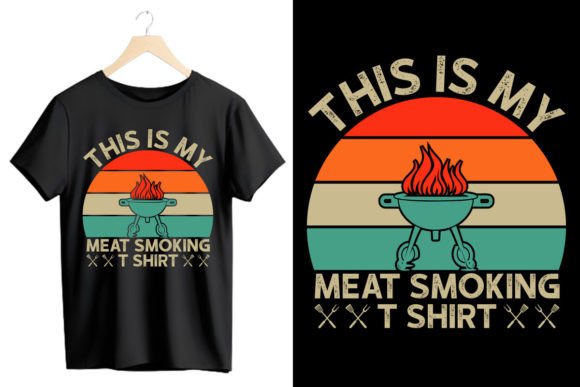
This Is My Meat Smoking T Shirt
“This Is My Meat Smoking” isn’t just a phrase—it’s a statement of craft, patience, and pride. Whether you’re running a backyard smokehouse, launching a BBQ brand, or designing apparel for a food-focused audience, This is My Meat Smoking T Shirt serves as both a functional design asset and a thematic anchor. It’s not a novelty gag; it’s a versatile, production-ready graphic built for real-world use across print-on-demand platforms, merch lines, and creative projects.
What This Is My Meat Smoking T Shirt Actually Is
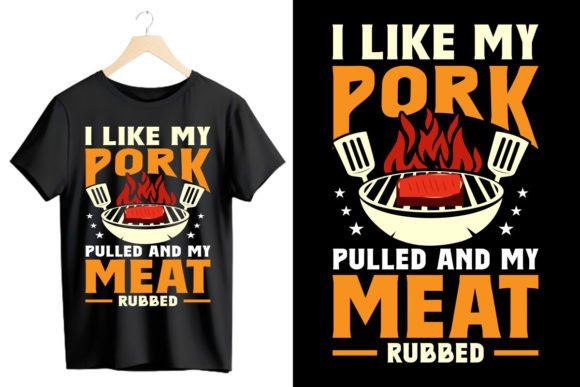
At its core, This is My Meat Smoking T Shirt is a professionally crafted vector-based design—clean, scalable, and intentionally styled with retro typography and subtle vintage texture. It’s optimized for legibility at multiple sizes and consistent reproduction across fabric, ceramic, paper, and digital surfaces. The phrase itself taps into a cultural rhythm: the quiet confidence of someone who knows fire, time, and temperature—and trusts the process. That resonance makes it more than decoration. It becomes identity, branding shorthand, or even a conversation starter in food communities, small-batch markets, or culinary education spaces.
How It Fits Into Real Workflows
Design assets like This is My Meat Smoking T Shirt rarely exist in isolation. They slot into broader workflows—sometimes early, sometimes late—but always with intention.
For creators building a product line on platforms like Printful, Redbubble, or Amazon Merch, this design arrives pre-optimized: no resizing, no guesswork. You upload the PNG or EPS file directly, assign it to a t-shirt mockup, and move to listing. No need to hire a designer or adjust kerning for readability at 12 inches wide on a hoodie chest. That saves hours—not just in execution, but in quality control. You avoid pixelation, color shift, or misaligned layers because the files were built for consistency from the start.
For educators or content creators teaching smoking techniques, food safety, or culinary entrepreneurship, this design supports visual storytelling. Print it on a poster for a workshop wall, embed the SVG in a lesson slide deck, or use the AI file to customize colors for a specific brand palette. It becomes part of a learning ecosystem—not just decor, but a tactile reinforcement of core concepts like low-and-slow, wood selection, or meat thermometry.
Compatibility and Cross-Platform Use
The included file formats aren’t arbitrary—they reflect actual production needs:
- PNG (4500×5400, 300 dpi, transparent): Ideal for direct upload to POD services where background removal matters—no clipping masks needed.
- EPS and AI files: Essential for vector editing in Adobe Illustrator or Affinity Designer. Resize infinitely, recolor individual letters, or isolate elements for embroidery digitizing.
- PDF: Works reliably in Canva, Cricut Design Space, and KDP interior templates—especially useful for lined journals or interior prints where bleed and margin precision matter.
- JPG: A fallback for quick social media posts, email banners, or internal presentations where transparency isn’t required.
Because all files are bundled in one ZIP archive, version control stays simple. You don’t juggle folders named “final_v3_transparent,” “backup_no_bg,” or “for_mug_2023.” One extraction step delivers every usable variant—reducing friction during launch sprints or seasonal refreshes.
Practical Implementation Tips
Here’s how to integrate This is My Meat Smoking T Shirt smoothly, without overcomplicating things:
- Start with your end use. If you’re printing on mugs, test the JPG or PNG first on a white ceramic surface—then switch to the EPS if you need to adjust spacing for handle alignment. Don’t default to vector unless scaling or editing is necessary.
- Check color mode before printing. The design ships in RGB, which works fine for most POD providers. But if you’re sending to a local screen printer or offset press, convert the PDF or AI file to CMYK and verify Pantone matches—especially if your brand uses specific reds or charcoals.
- Use the transparent PNG for layered mockups. Drop it onto a high-res t-shirt photo in Photoshop or Photopea, then apply realistic shadows and fabric folds. This builds trust faster than generic templates.
- Leverage the SVG for cut files. If you run a vinyl decal shop or sell iron-ons, import the SVG into Cricut or Silhouette Studio. Adjust cut settings for HTV or permanent vinyl—no tracing required.
Integration With Other Tools and Assets
This design doesn’t replace your workflow—it extends it. Pair it with:
- Brand guidelines: Pull the primary typeface or dominant hue from the design and apply it consistently across your website, packaging, or social bios.
- Content calendars: Time a “Meat Smoking Week” campaign around a new product drop—use the design on Instagram carousels, email headers, and printable checklists.
- KDP interiors: Place the PDF version inside a low-content journal titled *Smoker’s Logbook*—with blank pages for tracking rubs, temps, and cook times. The design adds thematic cohesion without crowding functionality.
- Educational bundles: Combine the AI file with a downloadable PDF guide on wood pairing, then offer both as a lead magnet. The vector file becomes a value-add—not just an image, but a customizable tool.
Long-Term Usability and Quality Control
A good design asset earns its place over time—not just through initial use, but through adaptability. This is My Meat Smoking T Shirt holds up because it avoids trend traps: no gradients that date quickly, no overly stylized fonts that limit readability, and no embedded raster effects that break when scaled. That means you can reuse it across seasons, rebrand it with minimal edits, or repurpose it for physical signage years later—without needing a redesign.
It also supports consistency across touchpoints. When customers see the same phrase rendered cleanly on your t-shirt, your mug, and your workshop handout, they register coherence—not coincidence. That builds credibility, especially in food-related niches where authenticity matters.
Final Thought: Design as Infrastructure
Treat This is My Meat Smoking T Shirt like infrastructure—not decoration. It’s part of your operational toolkit: something you reach for when launching, teaching, selling, or documenting. Its value isn’t in being clever or viral. It’s in being reliable, precise, and ready—so you spend less time troubleshooting files and more time doing the work that matters: building, sharing, cooking, and connecting.