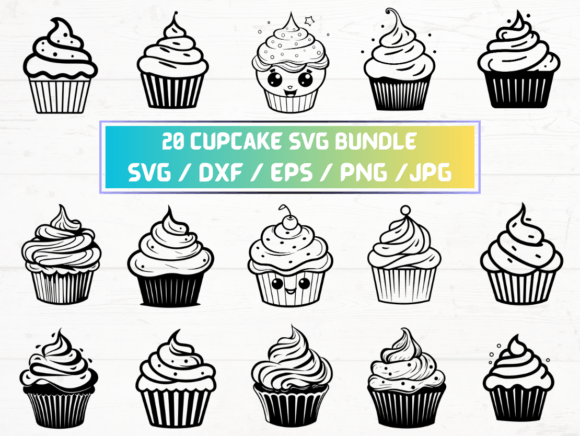
30 Cupcake SVG Files: A Strategic Design Asset for Purpose-Driven Creators
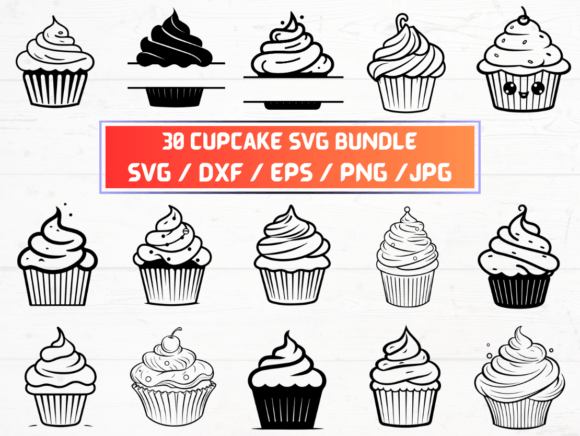
When you acquire 30 Cupcake SVG Files, you’re not just downloading graphics—you’re adding a calibrated set of visual tools to your creative infrastructure. This ZIP folder contains 30 SVG, PNG (300 dpi, transparent background), DXF, JPG, and EPS files—five formats, each serving distinct technical and operational needs. It’s an instant digital download with no physical component, designed for immediate integration into design workflows, product development, marketing campaigns, or educational resources.
Why Format Diversity Matters More Than Quantity
The real strategic value of 30 Cupcake SVG Files lies in its multi-format structure—not just the number of cupcakes. SVG files scale infinitely without loss of quality, making them ideal for responsive web graphics, interactive dashboards, or embedded UI elements. DXF files support precision cutting for crafters using Cricut, Silhouette, or laser cutters—critical for small-batch product creators launching cupcake-themed merchandise, party supplies, or bakery packaging. PNGs at 300 dpi with transparency enable clean layering in social media graphics, email headers, or printable lesson plans. EPS ensures compatibility with legacy print workflows, while JPGs offer lightweight fallbacks for fast-loading web banners or internal presentations.
That breadth means one purchase supports multiple roles: a freelance designer preparing assets for a client’s confectionery brand refresh; an educator building themed classroom materials; a small business owner prototyping custom cupcake toppers or labels; or a marketer developing seasonal Instagram story templates. The key is matching format to function—not defaulting to SVG because it’s trendy, but choosing it because scalability matters for that specific use case.
Strategic Use Starts With Intentional Alignment
Using 30 Cupcake SVG Files effectively begins before opening the ZIP folder. Ask: What outcome am I trying to achieve? Not “I need cupcake graphics,” but “I’m launching a subscription box for baking kits and need consistent, on-brand icons across packaging, website, and email sequences.” Or: “My students struggle with visual literacy—how can I embed these cupcake motifs into differentiated math worksheets without distracting from core concepts?”
Without that clarity, even high-quality assets become noise. You might drop a PNG into a presentation only to realize later it doesn’t resize cleanly for a printed handout—or use an SVG in a CMS that doesn’t render vector paths correctly, resulting in broken visuals and rework. Intentional use means auditing your current tools first: Does your cutting machine software accept DXF? Does your LMS allow SVG uploads? Does your print vendor require CMYK EPS? These aren’t setup details—they’re decision points that determine whether 30 Cupcake SVG Files saves time or creates friction.
Real-World Applications Across Roles
- Entrepreneurs & Small Business Owners: Use the DXF files to cut vinyl decals for mason jar labels or acrylic cupcake stands. Pair PNGs with Canva templates to generate weekly Instagram posts promoting limited-edition flavors—keeping visual consistency without hiring a designer every time.
- Educators & Curriculum Developers: Import SVGs into Google Slides or PowerPoint to build interactive drag-and-drop activities (e.g., sorting cupcakes by fraction values or decorating based on grammar rules). The transparent-background PNGs integrate cleanly into PDF worksheets or digital flashcards.
- Marketers & Content Creators: Leverage EPS files for professional press kits or investor decks where print fidelity matters. Repurpose the same SVG across a blog header, Pinterest pin, and YouTube thumbnail—ensuring recognition without pixelation across devices.
- Freelancers & Agencies: Build a reusable library: rename files clearly (e.g., “cupcake-chocolate-sprinkles-svg”), document color palettes used, and store them in a shared cloud folder with usage notes. That turns 30 Cupcake SVG Files into a scalable, billable resource—not a one-off download.
Risks of Context-Free Adoption
There’s real risk in treating 30 Cupcake SVG Files as a “just in case” asset. Without alignment to goals, it contributes to digital clutter: forgotten folders, mismatched color schemes, inconsistent styling across platforms, or redundant licensing questions (though this is royalty-free, misuse still carries reputational cost). Worse, it can delay decisions—spending hours tweaking cupcake icons instead of validating whether visual metaphors resonate with your audience at all.
One common misstep: assuming more variants equal more flexibility. But if your brand palette uses only navy and gold, a cupcake file rendered in neon green and hot pink adds zero value—and may dilute perception. Another: overlooking accessibility. A decorative cupcake SVG used as a bullet point in a slide deck should carry alt text; a PNG used in an email newsletter needs sufficient contrast against its background. Technical capability doesn’t excuse thoughtful implementation.
Planning Tips for Long-Term Value
- Map to your workflow first. List the tools you use daily (e.g., Adobe Illustrator, Cricut Design Space, Figma, Google Docs). Then assign which file type serves each tool best—and delete or archive formats you won’t use. Reduces cognitive load and storage bloat.
- Standardize naming and organization. Rename files with descriptive, consistent syntax: “cupcake-vanilla-icing-svg”, “cupcake-red-velvet-dxf”. Avoid generic names like “image1.svg”—they erode findability over time.
- Test before scaling. Run one SVG through your web builder. Cut one DXF on scrap material. Place one PNG in your email template. Confirm rendering, sizing, and color accuracy before rolling out across channels.
- Document usage rights internally. Even though this is a personal-use, royalty-free license, clarify with your team whether redistribution (e.g., embedding in a client’s template library) is permitted. Prevents assumptions that lead to compliance gaps.
- Revisit quarterly. Ask: Did these files help us ship faster? Reduce vendor dependency? Improve engagement metrics? If not, analyze why—not to discard the asset, but to refine how you apply it next cycle.
Positioning Beyond Decoration
Cupcakes are culturally legible symbols—celebration, reward, approachability, craftsmanship. That symbolic weight makes 30 Cupcake SVG Files more than clip art. Used deliberately, they reinforce messaging: a cupcake icon beside a “completed” status in a learning platform signals achievement; a minimalist SVG in a SaaS dashboard conveys user delight after onboarding; a set of varied cupcake PNGs in a nonprofit’s donor report visualizes impact tiers (“10 cupcakes = 10 meals served”).
But symbolism only lands when grounded in strategy. A bakery using identical cupcake graphics across Instagram, packaging, and invoices builds trust through repetition—but only if the style reflects their actual brand voice (e.g., hand-drawn warmth vs. sleek minimalism). Using the same files across unrelated contexts—say, a fintech app and a preschool newsletter—weakens coherence. The asset doesn’t define positioning; it amplifies it. Your goals do.
Final Consideration: What You Do With the Files Matters More Than What They Are
30 Cupcake SVG Files is a lever—not the engine. Its ROI depends entirely on how precisely you apply it to real problems: shortening design turnaround for seasonal promotions, enabling hands-on learning in under-resourced classrooms, or maintaining visual rigor across distributed teams. It gains value when treated as infrastructure: documented, tested, aligned, and reviewed—not as decoration waiting for inspiration.
If your goal is consistency without compromise, speed without sacrificing quality, or creativity anchored in execution—then this collection delivers. But only if you start with purpose, not pixels.