Bird SVG: A Strategic Asset for Modern Digital Creators and Businesses
In today’s fast-paced digital landscape, precision, scalability, and cross-platform compatibility are no longer optional—they’re foundational. That’s why Bird SVG has emerged not just as another design asset, but as a functional, future-ready tool for professionals across creative, marketing, entrepreneurial, and technical domains. More than a collection of files, it represents a deliberate response to evolving workflow demands—where speed meets fidelity, and versatility meets intention.
What Is Bird SVG—And Why Does It Matter Beyond the File Extension?
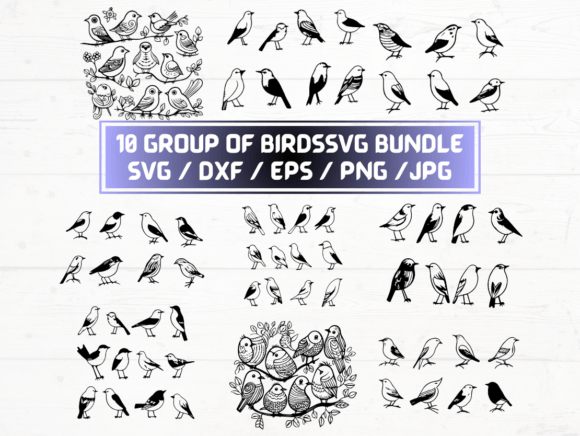
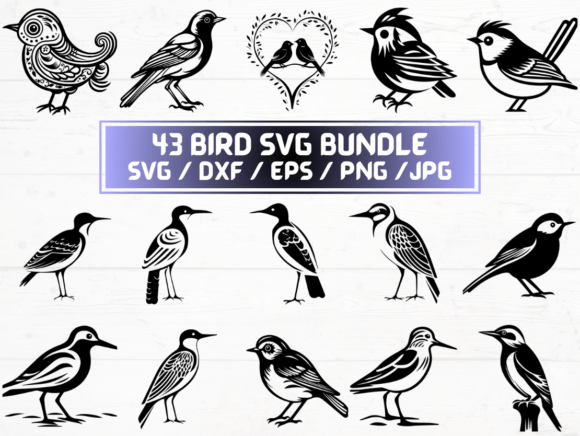
Bird SVG refers to a curated, production-grade set of vector and raster assets centered around avian motifs—designed with professional application in mind. But its value lies far beyond aesthetics. Each element is built using clean, layered, and editable vector paths (SVG, DXF, EPS), optimized for CNC cutting, laser engraving, vinyl plotting, web development, and print-ready layouts. The inclusion of 43 matching PNG files at 300 dpi with transparent backgrounds—and equivalent JPG and EPS variants—ensures seamless integration across platforms, from Shopify product mockups to Cricut Design Space projects or Adobe Illustrator brand extensions.
This isn’t clipart repackaged. It’s workflow-native design infrastructure: purpose-built for creators who need consistency across physical fabrication, digital publishing, and interactive media—all without re-exporting, re-tracing, or compromising resolution.
Aligning With Industry Shifts: From Static Assets to Scalable Systems
The rise of Bird SVG mirrors broader industry transitions. First, there’s the accelerating adoption of digital-first production. Whether you’re a small-batch apparel entrepreneur running an Etsy shop, a freelance packaging designer building mockups for eco-conscious brands, or a marketing manager producing social assets for a nature-based wellness campaign—the expectation is now instant readiness, not hours spent prepping files.
Second, hardware ecosystems have matured. Desktop CNC machines, diode lasers, and smart cutters like Silhouette Cameo and Cricut Maker now support native SVG and DXF import with reliable path interpretation. That means designers no longer need to convert or simplify—Bird SVG arrives pre-validated for accurate toolpath generation and material-efficient nesting.
Third, the demand for cross-channel brand coherence continues to intensify. A logo used on a website (SVG), embroidered on a tote (DXF for embroidery software), printed on recycled kraft paper (EPS for offset), and animated in a landing page hero section (optimized PNG sequence)—all benefit from originating from the same source geometry. Bird SVG delivers that continuity out of the box.
Real-World Applications: Where Theory Meets Execution
Consider these practical scenarios:
- A sustainable stationery brand uses the SVG files to laser-cut bird silhouettes into seed paper tags—then deploys the same vectors as subtle watermark motifs in email newsletters and PDF lookbooks.
- A freelance UI/UX designer integrates the PNG variants into Figma component libraries for accessible icon sets—leveraging transparency and consistent stroke weights to maintain visual hierarchy across dark and light mode interfaces.
- An educator creating STEM curriculum imports the DXF files into Tinkercad, modifies proportions for 3D-printed ornithology models, and shares editable versions with students—turning a static graphic into an active learning scaffold.
- A boutique marketing agency builds dynamic ad variations for Instagram and Google Display by swapping PNG layers in After Effects templates—no manual masking, no resolution drop-offs, no asset versioning chaos.
These aren’t edge cases. They reflect how professionals now treat design files—not as endpoints, but as interoperable inputs in larger systems of creation, distribution, and engagement.
Why Professionals Are Prioritizing Editable, Multi-Format Collections
Gone are the days when “download and use” meant dragging a low-res JPG into a PowerPoint slide. Today’s workflows require intentional flexibility:
- Version control matters. When every format (SVG, DXF, EPS, PNG, JPG) maps precisely to the same vector source, updates propagate cleanly—no more mismatched corners or inconsistent line weights across deliverables.
- Time-to-output is a KPI. Marketing teams launching seasonal campaigns, product teams iterating packaging prototypes, or educators preparing classroom kits all operate under compressed timelines. Having 43 ready-to-deploy formats—delivered instantly as a ZIP folder—eliminates bottlenecks tied to file conversion or vendor dependencies.
- Accessibility and inclusivity start with structure. Properly authored SVG files support semantic labeling, keyboard navigation, and screen reader compatibility—critical for public-facing websites, educational platforms, and government-adjacent projects. Bird SVG’s clean path construction supports those goals without requiring developer intervention.
It’s also worth noting the quiet shift toward asset sovereignty. As SaaS tools evolve—and subscription models change—professionals increasingly favor owning editable, platform-agnostic files. SVG and DXF are open standards; they don’t lock users into proprietary ecosystems. That independence translates directly into long-term cost efficiency and creative autonomy.
Technology, Craft, and Context: How Bird SVG Fits Into Larger Trends
At surface level, Bird SVG is about birds. But symbolically and functionally, it reflects deeper currents:
- Nature-integrated branding is rising across wellness, education, sustainability, and fintech—where organic forms signal trust, resilience, and balance. Avian motifs, in particular, carry cross-cultural resonance: flight (ambition), vision (clarity), migration (adaptability). Using them thoughtfully strengthens narrative cohesion.
- Hybrid making—blending digital design with physical output—is no longer niche. Makerspaces, university labs, and corporate innovation hubs rely on assets that bridge software and hardware. Bird SVG serves that bridge intentionally.
- DesignOps maturity means teams expect reusable, documented, interoperable components—not one-off graphics. A collection like this, with parallel formats and consistent naming, supports scalable design system practices—even at solo-creator scale.
None of this requires speculation. These are observable patterns—documented in design tool usage reports, maker community surveys, and platform analytics from sites like Creative Market and Design Bundles, where multi-format bundles consistently outperform single-format listings in both conversion and repeat purchase rates.
Practical Next Steps: Integrating Bird SVG Into Your Workflow
If you're evaluating whether Bird SVG fits your needs, ask yourself:
- Do I regularly switch between web, print, and physical fabrication outputs?
- Do I spend time converting, resizing, or troubleshooting compatibility issues with design assets?
- Do my clients or collaborators expect consistent visual language across touchpoints—from email headers to trade show signage?
- Am I investing in tools (Cricut, Glowforge, LightBurn, Illustrator, Figma) that benefit from native-format support?
If two or more answers are “yes,” then Bird SVG isn’t just convenient—it’s operationally strategic. Its instant download delivery model aligns with modern expectations: no shipping delays, no inventory overhead, no licensing ambiguity. You receive 43 SVG files, 43 PNG files (300 dpi, transparent background), 43 DXF files, 43 JPG files, and 43 EPS files—all structured, labeled, and tested for real-world use.
And because it’s a digital product, there’s no physical item shipped—just immediate access to assets engineered for durability, adaptability, and reuse. That simplicity itself is a competitive advantage in an era where frictionless onboarding determines whether a tool gets adopted—or archived.
Looking Ahead: Not Just Files, But Foundations
Bird SVG is more than a bundle. It’s evidence of a maturing ecosystem—one where creators expect intelligent, interoperable, ethically sourced digital assets that respect their time, tools, and intentions. As AI-assisted design accelerates, the value of human-curated, technically precise, context-aware resources only increases. Clean vectors don’t compete with generative tools—they anchor them. They provide the calibration points, the stylistic guardrails, and the production certainty that keeps output grounded in craft.
For professionals building brands, teaching skills, launching products, or designing experiences, Bird SVG offers something rare: a small, focused investment that scales across disciplines, platforms, and timelines. It doesn’t promise transformation—but it reliably removes friction, sharpens execution, and quietly elevates output quality. In a world of noise and novelty, that kind of thoughtful utility is increasingly indispensable.