Cross SVG, DXF, EPS, JPG: The Versatile Digital Asset Powering Modern Creative Workflows
Across design studios, maker spaces, marketing agencies, and entrepreneurial ventures, a quiet but powerful shift is underway—one defined not by flashy AI tools or subscription platforms, but by the thoughtful, interoperable, and instantly deployable digital asset. At the center of this shift stands the Cross SVG, DXF, EPS, JPG bundle: a purpose-built collection engineered for flexibility, precision, and speed. More than just a set of file formats, it represents a strategic response to how professionals and creators actually work today—across devices, software ecosystems, production methods, and business stages.
What Is Cross SVG, DXF, EPS, JPG—And Why Does Format Diversity Matter?
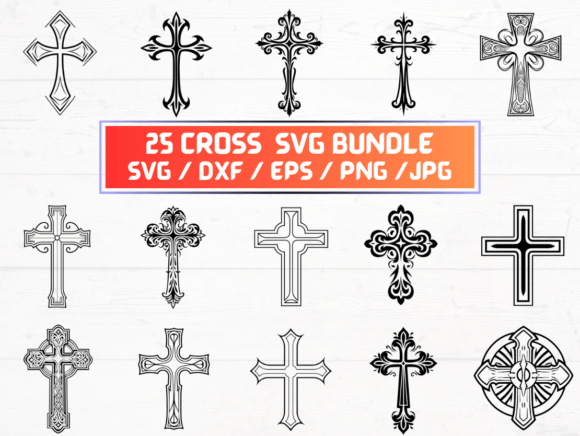
“Cross SVG, DXF, EPS, JPG” refers to a unified digital resource delivered in five complementary vector and raster formats—SVG (Scalable Vector Graphics), DXF (Drawing Exchange Format), EPS (Encapsulated PostScript), JPG (Joint Photographic Experts Group), and PNG (Portable Network Graphics)—all centered around a single, refined cross motif. This isn’t a generic clipart pack. Each format serves a distinct technical role:
- SVG delivers resolution-independent scalability and web-native interactivity—ideal for responsive websites, animated UI elements, and modern CMS integrations.
- DXF is the lingua franca of CNC routers, laser cutters, and CAD-based fabrication—essential for makers, sign shops, and custom product developers.
- EPS remains a trusted standard for high-fidelity print workflows, especially in legacy prepress environments requiring CMYK separation and embedded fonts.
- JPG offers universal compatibility for social media, email campaigns, presentations, and quick-turn visual assets—optimized at 300 dpi for clarity without bloat.
- PNG (included as part of the 25 transparent-background files) enables seamless layering over photos, videos, or branded backdrops—critical for digital ads, video overlays, and e-commerce mockups.
This intentional cross-format coverage eliminates the friction of format conversion, version chasing, or last-minute compatibility fixes—saving hours per project and reducing error-prone manual rework.
Bridging Gaps Across Industries and Workflows
The rise of multi-platform creative output has eroded the “one-size-fits-all” asset model. A freelance designer crafting a client’s brand kit may need SVG for their website, EPS for printed stationery, and PNG for Instagram Stories—all from the same source. A small-batch apparel entrepreneur might use DXF to cut iron-on vinyl for t-shirts, JPG for Amazon product listings, and SVG to embed into an automated Shopify theme. Meanwhile, a church communications director preparing Easter materials could pull the same cross motif into Canva (via PNG), Cricut Design Space (via SVG or DXF), and Adobe InDesign (via EPS)—without ever opening Illustrator.
This reflects a broader industry evolution: toolchain decentralization. Professionals no longer rely on a single suite like Adobe Creative Cloud. Instead, they curate lightweight, specialized tools—Canva for rapid social visuals, Cricut Design Space for craft automation, Figma for collaborative UI prototyping, Silhouette Studio for cutting machines, and WordPress for live publishing. A Cross SVG, DXF, EPS, JPG bundle meets users where they are—not where a software vendor assumes they should be.
Why Timing Matters: Converging Trends Driving Demand
Three converging forces make cross-format assets more valuable—and more necessary—than ever before:
- The Acceleration of Hybrid Production: Physical + digital output is no longer niche—it’s expected. Whether it’s engraved wooden crosses for wedding favors (DXF), embroidered patches for ministry teams (SVG + PNG), or animated worship slides (SVG + JPG), creators must move fluidly between screen and substrate. Relying on a single format creates bottlenecks; cross-format readiness builds resilience.
- The Rise of Low-Code & No-Code Ecosystems: Platforms like Webflow, Mailchimp, Squarespace, and even TikTok’s creative suite increasingly accept direct SVG or PNG uploads—but often reject EPS or DXF. Having all five ensures you’re never blocked by platform limitations. It also future-proofs your library: as new tools emerge, format support expands, and your existing assets remain immediately usable.
- Operational Efficiency as a Competitive Differentiator: For freelancers and micro-agencies, time is revenue. Spending 20 minutes converting a logo from SVG to DXF—or troubleshooting a misaligned EPS bleed—directly impacts margins and delivery timelines. With Cross SVG, DXF, EPS, JPG, that time vanishes. You download, deploy, and deliver—often within minutes.
Practical Impact: Real-World Use Cases
Consider these scenarios—each grounded in current professional practice:
- A faith-based nonprofit launching a year-long discipleship campaign uses the 25 SVG files to build interactive Bible study cards in Figma, exports JPG versions for printed handouts, and drops PNGs with transparency into Zoom backgrounds and YouTube thumbnails—maintaining consistent visual language across every touchpoint.
- An Etsy seller specializing in personalized wooden decor imports the DXF files directly into LightBurn for laser engraving, while using the 300 dpi JPGs to generate realistic lifestyle mockups via Placeit—no photo shoots required. The EPS files ensure flawless reproduction when ordering bulk-printed packaging.
- A university chaplaincy team designing Lenten devotional materials pulls SVGs into Google Slides for editable presentation decks, layers PNGs over campus photography for social posts, and shares the EPS files with campus print services for high-quality bulletin inserts—without needing internal design staff.
What unites these examples isn’t just the motif—it’s the operational fluency enabled by having every format, ready-to-use, in one ZIP folder.
Cloud-Native Delivery Meets Professional Expectations
The ☁️ PRODUCT INFORMATION highlights something equally critical: instant, cloud-based delivery. Today’s professionals expect digital products to behave like SaaS tools—not physical goods. They don’t want shipping delays, customs forms, or inventory tracking. They want to complete a purchase and begin implementation within seconds. That’s exactly what this listing delivers: a ZIP folder containing 25 SVG, 25 PNG, 25 DXF, 25 JPG, and 25 EPS files—ready for immediate integration.
This model aligns with evolving consumer expectations across B2B and creator economies. According to recent digital product benchmarks, buyers abandon carts when download steps exceed two clicks—or when file organization feels haphazard. This bundle avoids both pitfalls: files are logically named (e.g., cross-thin-outline.svg, cross-solid-black.jpg), grouped by format, and compressed into a single, lightweight archive. No extraction headaches. No missing licenses. No ambiguity about usage rights—designed expressly for commercial application.
Looking Ahead: Interoperability as Infrastructure
As AI-generated assets become more common, the value of human-curated, technically precise, cross-platform resources grows—not diminishes. AI tools excel at ideation and variation, but often fall short on production-grade fidelity, color accuracy, and format-specific optimization. A well-structured Cross SVG, DXF, EPS, JPG bundle provides the reliable, editable foundation upon which AI enhancements can be layered—not replaced.
More importantly, it signals a maturing understanding of digital craftsmanship: that excellence lies not only in aesthetic refinement, but in deployment intelligence. It’s the difference between creating something beautiful—and creating something that works, everywhere, immediately.
For professionals navigating tight deadlines, diverse clients, and rapidly shifting tools, this isn’t convenience. It’s continuity. It’s confidence. It’s creative infrastructure—delivered in a ZIP file.